




The Washington State Board of Education (SBE) acknowledges the inherent sovereignty of Tribal governments and their right to self-governance and self-determination. The Board honors Tribal treaty rights and the unique government-to-government relationships it maintains with each of the federally recognized Tribes whose ancestral territories are within present-day Washington.
In November 2024 SBE hired our Tribal Liaison and Community Engagement Coordinator. This role fosters open communication with Tribal leaders and community members, builds authentic relationships, and supports the Board in developing policies that honor Tribal sovereignty and lived experience.
Framework for Tribal Consultation
The Board approved its Framework for Tribal Consultation during its June 2026 Board meeting. The framework establishes a process to strengthen government-to-government consultation with Washington's federally recognized Tribes and ensures Tribal perspectives continue to inform the Board's work.
Since Spring 2025, the Board has consulted with 23 of Washington's 29 Federally recognized Tribes. Those consultations informed the development of the framework while also supporting the Board's ongoing government-to-government relationships.

Our Work
The following are a few things we are actively working on and that Tribes might be interested in.

Updating Graduation Requirements
We’re modernizing high school graduation requirements through our FutureReady initiative to ensure students graduate with the skills they need to succeed in today’s world. We are consulting with tribes to ensure any proposed requirements incorporate the perspectives of Tribes across the state.

Mastery-based Crediting
Mastery-based crediting allows students to earn high school credits for performance assessments such as a portfolio of student work or a hands-on demonstration of skills and knowledge (WAC 180-51-051). This gives students the opportunity to earn high school credits when learning about Tribal heritage and knowledge that aligns with state learning standards.
Highlighted Information
Supporting Washington State’s First Peoples’ Language Education
All federally recognized Tribes in Washington are sovereign nations and hold full authority over their first peoples’ languages, including decisions related to teaching, learning, and awarding credit.
Each sovereign Tribal government may certify individuals who meet the tribe's criteria for certification as instructors in Washington state's first peoples' language, culture, and oral tribal traditions program (WAC 181-78A-700). Students can earn up to four high school credits based on their first peoples’ language proficiency. Tribes are the sole determiner of language proficiency for their first peoples’ language.
Additionally, students who have been deemed proficient in their first peoples’ language are eligible to receive the Washington State Seal of Biliteracy, which honors high school graduates who are proficient in English and at least one other language, including Tribal languages.
Learn more about the First peoples’ language, culture, and oral traditions certification
Learn more about the Seal of Biliteracy
Past Chair Bill Kallappa II on His Story, Native Heritage, and Leading the State Board of Education
Three decades ago, Bill Kallappa II — a member of the Makah Tribe — began his career in education as a playground monitor for the Tumwater School District. Now in his final year of service on the Washington State Board of Education, Bill reflects on his career, his legacy as the first Native American to serve as chair of the Board, and his gives his advice for young Native students aspiring to leadership in education.
Photos

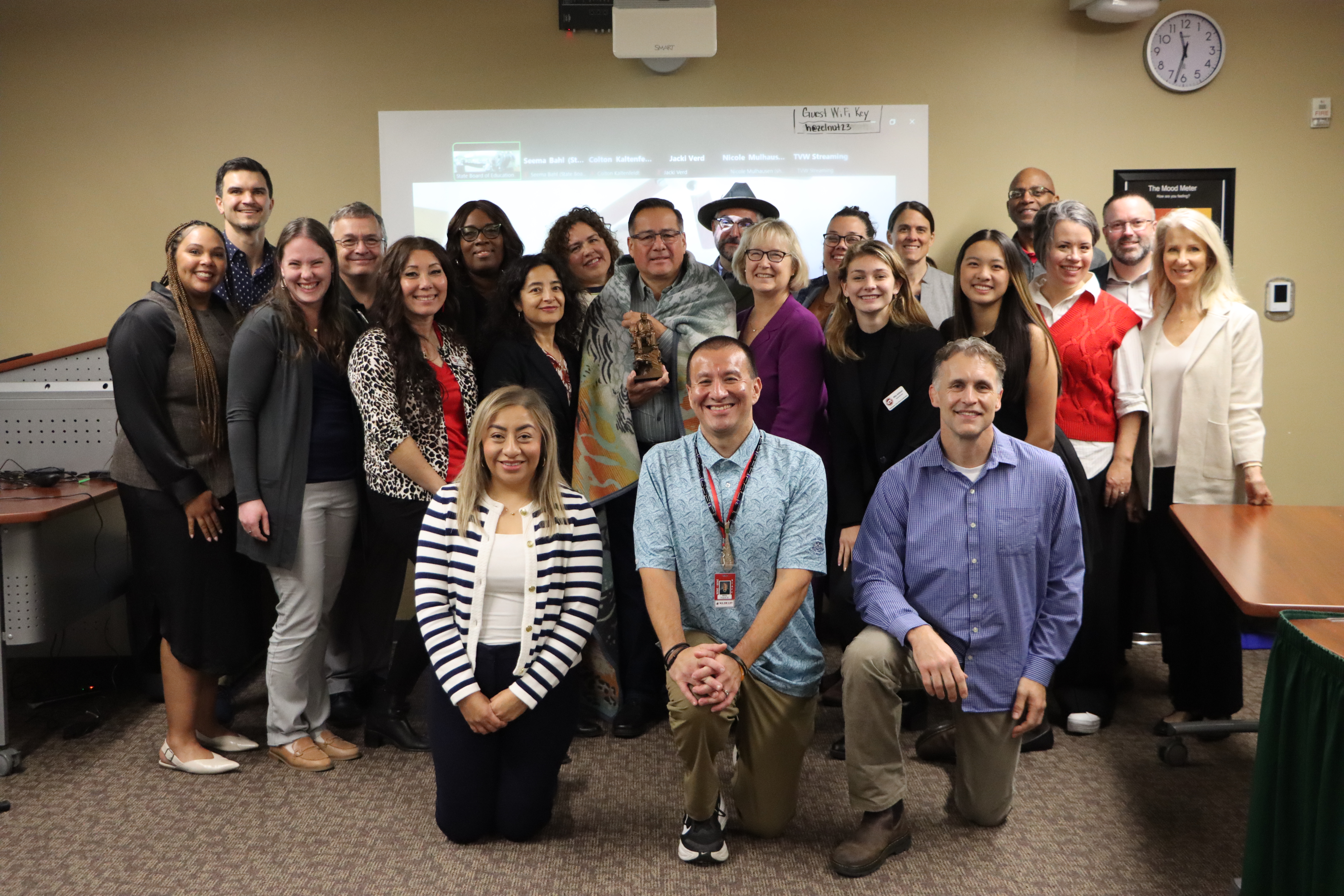

Pictured from left to right: Mary Fertakis, State Board of Education Chair; Dr. Randy Spaulding, State Board of Education Executive Director; Dr. Toron Woodridge, Toppenish School District Superintendent; Dr. Elese Washines, Yakama Nation Education Manager and Vice President of the Toppenish School District Board of Directors; and Dr. Lolita M. Ceja, Toppenish School District Indian Education Director.